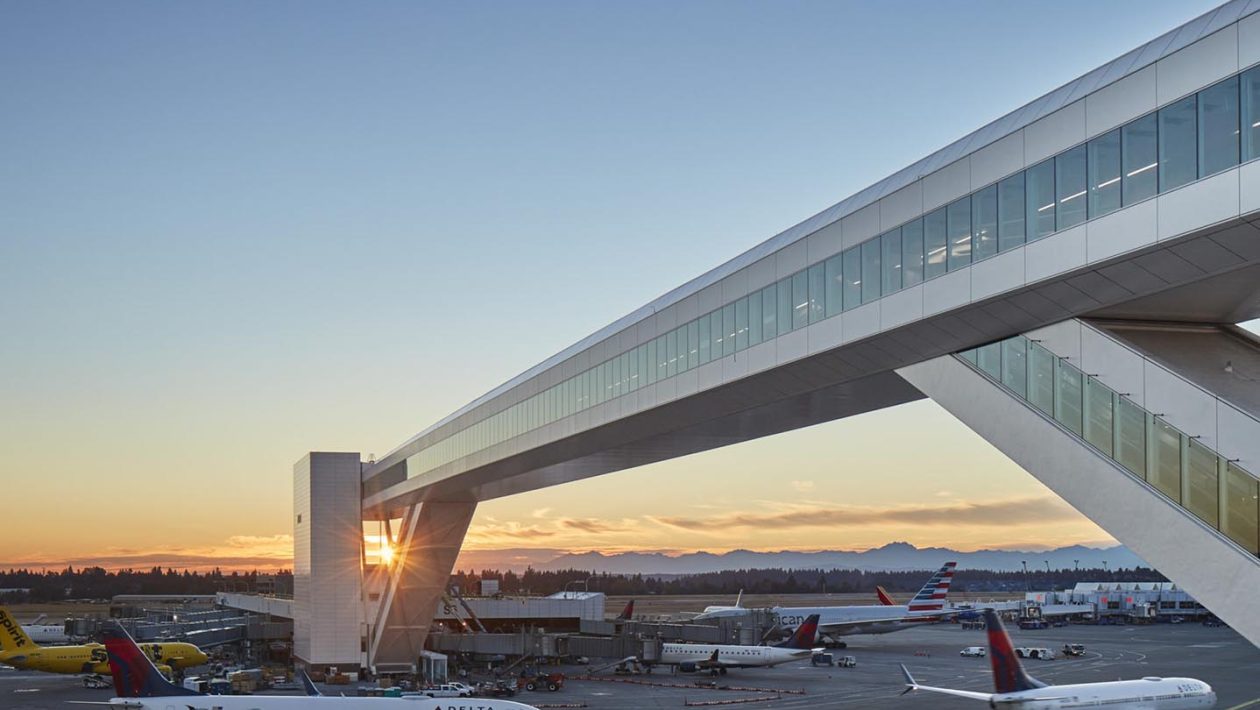
As an important international gateway city in the northwest of the United States, Seattle-Tacoma International Airport (SEA) connects many countries and regions around the world. For passengers who rely on public transportation, how to use public transportation efficiently and smoothly to transfer to international flights is the key to ensuring a comfortable and smooth journey.
1. Introduction to Seattle Airport and its status as a transportation hub
Seattle-Tacoma International Airport (SEA) is located about 23 kilometers south of downtown Seattle and is one of the busiest airports in the northwest of the United States. It not only undertakes a large number of domestic flights, but also connects international routes in Asia Pacific, Europe, Canada and Latin America. As the headquarters of Boeing, Seattle Airport occupies an important position in the aviation industry.
The airport has complete facilities, multiple terminals and a wide range of transportation supporting networks. Whether it is your first visit to Seattle or a transfer to an international flight, understanding the public transportation resources around the airport will greatly help save time and travel costs.
2. Overview of the main public transportation modes at Seattle Airport
The public transportation system at Seattle Airport is very developed, mainly including the following:
Link Light Rail
Bus (King County Metro & Sound Transit)
Airport shuttle and shuttle bus
Taxis and shared travel (Uber, Lyft, etc.)
Each mode of transportation has its own characteristics and applicable scenarios, which are introduced one by one below.
2.1 Link Light Rail – Quick and direct access to the city center and surrounding areas
Link Light Rail is the star of Seattle’s public transportation, connecting the airport and the city center, and the running time is about 15 to 20 minutes. The light rail station is located in the basement of the airport, with clear signs, and passengers can take it directly without leaving the airport.
The advantages of light rail are accurate time, frequent service (usually every 6-15 minutes), reasonable fares, and seamless connection to the main transportation hubs in the city center. It can also transfer to other lines to go to important commercial areas in the east such as Bellevue and Redmond.
2.2 Public buses – wide coverage, suitable for diverse travel needs
King County Metro and Sound Transit in and around Seattle operate multiple bus routes, covering the airport area, various urban areas and neighboring cities. Some bus routes serve the airport specifically, connecting different terminals and suburban areas.
Bus fares are low and the frequency is flexible, but it is greatly affected by traffic conditions. Passengers need to plan their departure time reasonably and reserve sufficient time for transfers.
2.3 Airport shuttles and shuttles – meet specific needs
The airport provides multiple free or paid shuttle routes, connecting the airport terminals, parking lots, car rental centers and nearby hotels. Some hotels and travel operators also provide scheduled shuttle services.
This type of shuttle is suitable for passengers with a lot of luggage or who need to travel to and from the airport. It is convenient and fast.
2.4 Taxis and shared travel – flexible and convenient last mile
Taxis and online car-hailing services are very popular at the airport, especially for passengers who are in a hurry or carry special luggage. Although the cost is relatively high, it provides door-to-door service, which is suitable for transfers with tight time or night flights.
3. Internal transportation and international flight transfer process at Seattle Airport
3.1 Terminal layout and location of international terminal
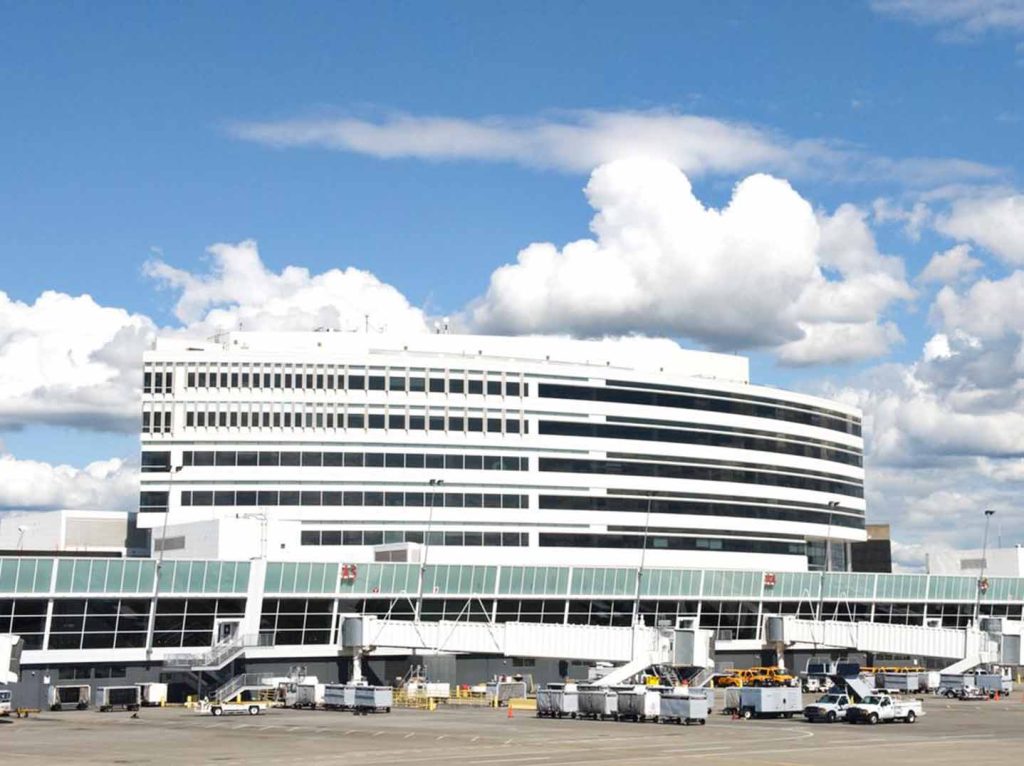
Seattle Airport is mainly divided into three terminal areas: North, Central and South Terminals. International flights are mainly concentrated in the South Terminal (Concourse A and Concourse S), where most international flights will go through immigration formalities.
Understanding the distribution of terminals will help passengers arrange reasonable public transportation connections and time planning according to arrival or departure flights.
3.2 Public transportation transfer suggestions for domestic to international flights
If you take public transportation from downtown Seattle or surrounding areas to the airport to transfer to an international flight, it is recommended in advance:
Check the departure time of the light rail or bus in advance to avoid crowds during peak hours.
Reserve at least 2.5 to 3 hours for international flight processing time (including security check, customs, etc.).
Carry valid documents and visas to ensure smooth security check and customs.
Check your luggage directly to the international flight (if possible) to avoid double check-in.
3.3 Transfer process from international to domestic flights
International arrivals generally need to go through customs and immigration inspections first, collect checked baggage, and then go to the corresponding domestic terminal boarding gate. If you need to use public transportation to go to other areas of the airport or the city center:
You can take the airport light rail, airport bus or designated shuttle bus.
Pay attention to the free shuttle buses between terminals to ensure the safe transfer of luggage.
Confirm the boarding gate and time of the next flight in advance, and arrange transportation and waiting time reasonably.
4. Detailed guide to public transportation at Seattle Airport
4.1 Link Light Rail Usage Guide
Site location: The light rail station is located in the basement of the airport main terminal, and the exit sign is obvious.
Ticket purchase method: The station has an automatic ticket machine that supports cash and credit card payment, and ORCA card (Seattle Public Transportation Card) can also be used.
Fare and time: The one-way fare is about US$3, and the operating hours are from 5 am to midnight, with frequent flights.
Luggage carrying: The light rail carriage has a special luggage storage area, which is suitable for carrying large checked luggage.
Convenient transfer: You can transfer to buses and other lines at multiple stations in the city, which is convenient for connection.
4.2 Detailed explanation of bus routes
Main airport routes: Line 7, Line 174 and Line 550 and other routes cover the airport area and the city center, and the fare is generally US$2.75.
Boarding point: Transportation hubs and designated bus stops outside the airport, with clear signs.
Operating hours: Some routes operate 24 hours a day, and some routes adjust the frequency according to time.
Ticket purchase and payment: Cash, ORCA card and mobile payment are supported. It is recommended to use ORCA card to save ticket purchase time.
Comfort tips: Buses have fewer routes than light rail and are easily affected by traffic. It is recommended to reserve more time.
4.3 Airport shuttle and hotel transfer service
Free shuttle bus: Connects the terminal and remote parking lot, runs frequently, and is convenient for passengers to park and transfer.
Car rental company shuttle: Many car rental companies provide shuttle services to and from the airport.
Hotel transfer: Some hotels near the airport provide scheduled shuttle buses to facilitate passengers who are staying in transit.
Usage suggestions: Contact the hotel or car rental company in advance to confirm the shuttle time to avoid waiting.
4.4 Tips for using taxis and shared travel
Pick-up point: The airport’s designated taxi pick-up and drop-off area is located outside the terminal.
Cost estimate: The cost from the city to the airport is generally between US$35 and US$50, depending on traffic conditions.
Shared travel: Uber, Lyft and other online car-hailing services are popular, and the price is slightly lower than that of taxis. You can make an appointment using the mobile app.
Peak period suggestions: Avoid calling a taxi during peak hours to avoid delays.
Luggage service: The driver generally provides help with luggage, which is suitable for passengers with limited mobility.
5. Practical suggestions and precautions for transferring to international flights
5.1 Plan your itinerary and transportation routes in advance
Use the airport’s official website or public transportation app to check the light rail and bus schedule in advance.
Reasonably arrange the departure time according to the flight time, and reserve sufficient transfer time to avoid tension.
Pay attention to flight dynamics and weather forecasts, and adjust your plans in advance in case of bad weather.
5.2 Baggage check-in and luggage carrying guide
Try to check your luggage directly at the departure point to avoid repeated handling during transfer.
Checked luggage is allowed on light rail and buses, but you need to pay attention to the safety of your luggage to avoid loss.
Travel light and avoid carrying oversized or overweight luggage. It is more convenient to take public transportation.
5.3 Security check and immigration clearance tips
Security check for international flights is strict. Prepare your boarding pass, passport and visa materials in advance.
Be familiar with prohibited items to avoid delays due to items.
Be patient during immigration inspection, follow the instructions of the staff, and pass through customs quickly.
5.4 Multilingual services and information acquisition
Seattle Airport and public transportation provide multilingual services, including Chinese services.
Consult the staff at the airport information desk or boarding point to obtain the latest traffic and transfer information.
Download relevant apps, such as the official Seattle public transportation app, to keep abreast of route dynamics in real time.
Reasonable planning and selection of public transportation can not only effectively save transportation expenses during travel, but also reduce the pressure caused by congestion, parking or high taxi fares. For tourists with limited budgets or focusing on travel cost-effectiveness, this is a key step in managing overall expenses. Reasonable use of buses, light rail or airport transfer systems can significantly reduce transportation costs.
Choosing the right mode of transportation is an important part of every successful trip.